
Cesar Cui
1835 - 1918

Although Lithuanian by birth (he was born in Vilnius), Cesar Cui has always been associated with the music of Imperial Russia.
So Cui: Lithuanian or Russian? Well probably more French than either! His connection with Russia was in truth a tad tenuous. His father was an officer in Napoleon’s Grande Armée which invaded Russia in 1812. Injured in a battle outside Smolensk he decided to settle in Vilnius where he married a noble Lithuanian woman.
Cui is also renowned as a member of “The Five”. A group of musicians who dominated Russia’s classical music scene in the later 19th century. It is an odd mix, you’ve almost certainly heard of Rimsky-Korsakov, Borodin and Mussorgsky? But what about Cui and Balakirev?
Perhaps Cui and Balakirev were better known as critics and for their influence on other composers, Tchaikovsky for instance?
Which while true is selling Cui short.
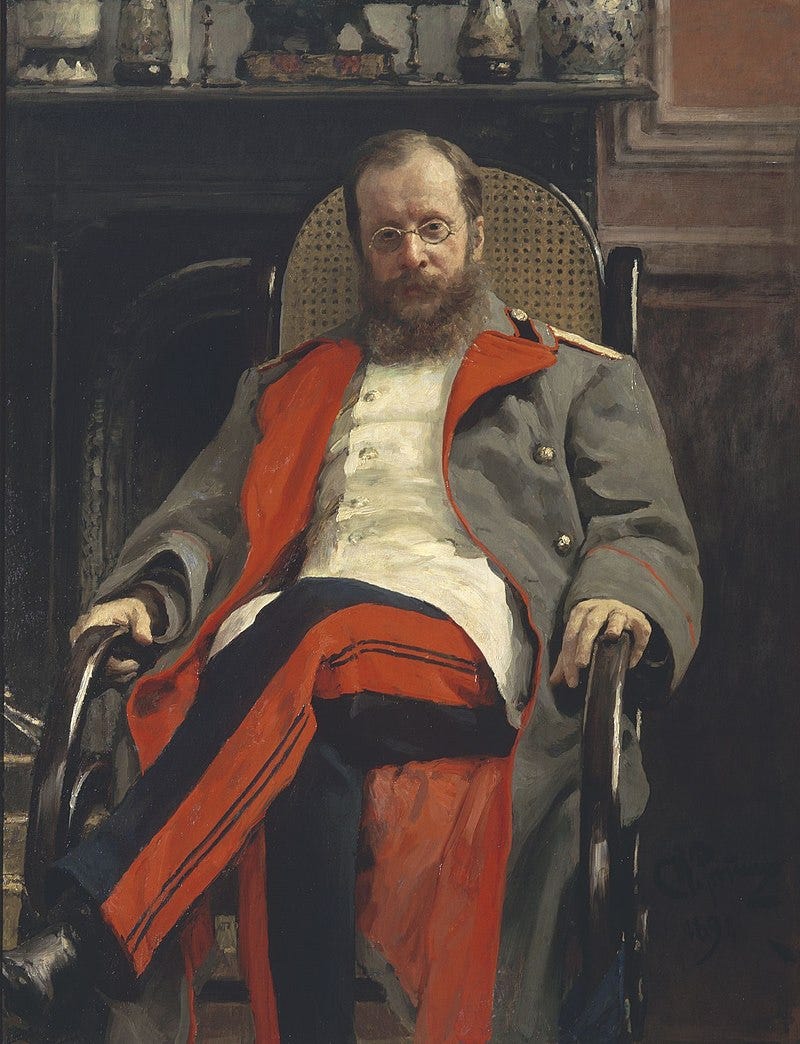
Cesar was schooled first in military engineering (he would go on to be an instructor and rise to the rank of general) but always had a flair for music. A flair that from 1850 he was able to refine and indulge in St Petersburg under Polish composer Stanislaw Moniuszko.
Here he gradually, over the course of a decade met and befriended the rest of The Five. Cui acquired a notoriety for his musical criticism. Sarcastic, acerbic and sometimes dismissive of composers considered the best of their generation, he did not always endear himself to others.
His own work has not survived in the modern repertoire and is rarely heard. But it encompasses a great range and is highly accomplished, from piano pieces, operas, sacred choral music, chamber music and a series of orchestral suites of which the one below is a personal favourite.
It sounded familiar in places but nonetheless, another opportunity to listen to a composer who is barely recognised.
Heard of him, pretty sure we've had him before, will listen later