
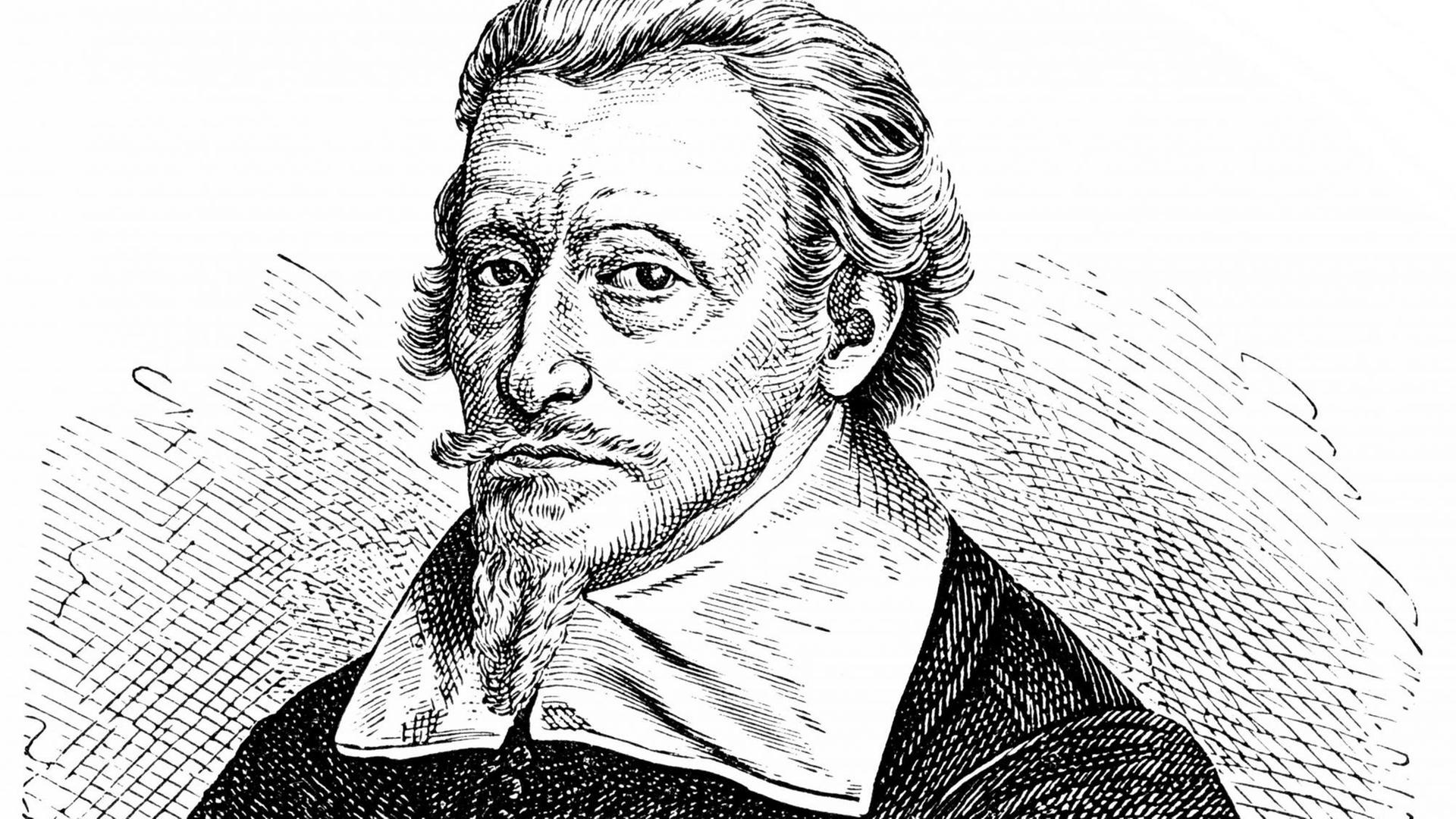
Heinrich Schütz
1585-1672

Born in Bad Köstritz, Schütz owed his living as a musician and composer to the local prince, Maurice the Landgrave of Hesse-Kassel.
Although initially sent to study law at the University of Marburg, the Landgrave funded him to spend three years in Venice studying music. Here he wrote his first compositions, a series of madrigals.
Back in Germany the Landgrave offered him the post of organist at the court in Kassel followed by a permanent post at the Electoral Chapel. But not so permanent that he couldn’t go off to Venice once more where he met, and possibly studied under, Monteverdi.
On his return to Germany Schütz contracted the plague. Although he survived this and the ravages of the 30 Years War in Germany persuaded him to leave Hesse-Kassel for Copenhagen.
However his patron and benefactor was having none of that and he returned to Germany for good in 1635 (13 years before the Treaty of Westphalia brought an end to the 30 years War).
Schütz is believed to have composed the first ever German Opera Dafne in 1627. He is credited with introducing Italian influences to Germany but his own style remains uniquely German.