
Zakaria Paliashvili
1871-1933

Zakaria Paliashvili was born in Kutaisi then part of the Russian Empire, now the Republic of Georgia. Although the family had no musical pedigree (Zakaria was the 3rd of 18 children), aged 8 the young Zakaria was admitted as a chorister to the Catholic Church choir in Kutaisi.
He developed a love of organ music and taught himself to play. Moving to Tbilisi, he joined the Georgian Ethnographic choir, the brainchild of Lado Agniashvili.
Very much as people like Cecil Sharpe in England, Paliashvili started collecting and exploring folk songs. He made recordings of over 300 folk songs and would eventually publish two volumes of traditional chants.
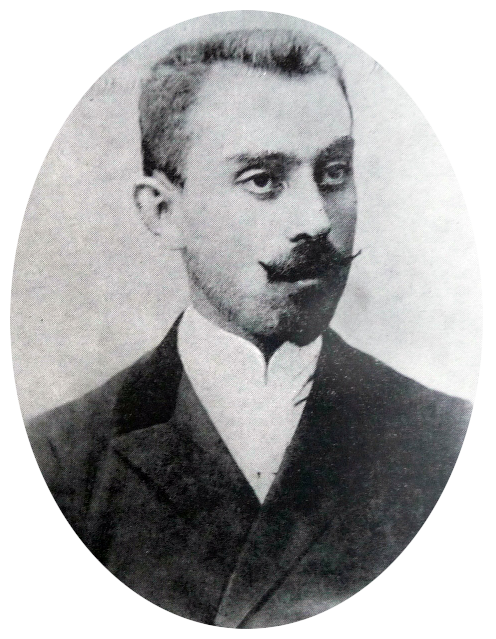
By 1900 he had been accepted to the Moscow Conservatory, where he studied composition under Sergei Taneyev.
Returning to Tbilisi he founded the Georgian Philharmonic Society and accepted an invitation to teach music at the Tbilisi Music School. His greatest poeratci composition almost never happened. He started working on “Abesalom and Eteri”in 1910, but he abandoned it in 1913 following the tragic death of his son.
Only in 1919 did he finalise it and see it through to its premiere apparently inspired by a dream in which his son urged him to complete it!
He made his mark as a composer of opera but also completed tone poems and instrumental pieces. In 1917 he was made the first director of the newly created Tbilisi Conservatoire.
He appears to have survived the transition to communism more or less unscathed and continued composing and conducting. He formed links with composers in the Ukrainian Soviet Republic and his music was warmly received there.
From 1930 his health rapidly declined and despite medical treatment he died on October 6, 1933.
Bit Rimsky-Korsakov, rather film music style, but very enjoyable
A neat synopsis, well researched as ever by our sainted musicologist. Thank you, Andrew. This is a fine piece which I enjoyed hugely. I sometimes find it difficult divorcing music of this quality from the tribulations of Georgia and its political strife.